
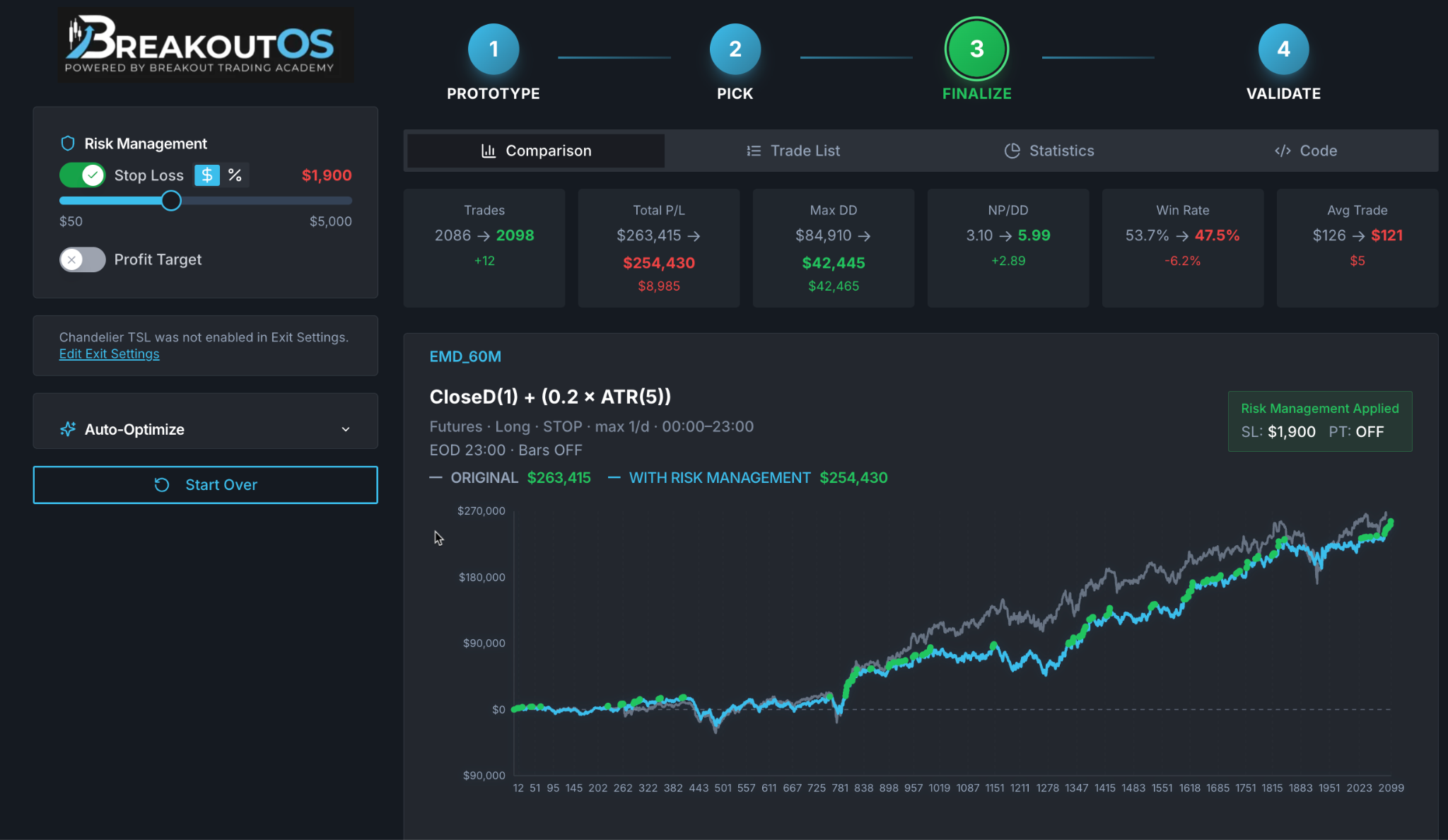
You build a strategy. The backtest looks great. You launch it. It loses money. Or you spend weeks chasing one viable idea and end up with nothing tradeable. Or you can't tell whether an AI-generated strategy has a real edge or is an overfit black box. These are the daily problems serious breakout traders face.
Breakout Trading Pro (BTP) is the strategy-building app inside BreakoutOS. It's built on the Mr. Breakouts Formula - a proven, hedge-fund-grade framework for systematic breakout trading - and was designed to handle 15 of those problems specifically. Some of them save you time. Some give you structured ways to check whether a strategy is actually robust before you risk money on it. Some just make the development process less painful. This article walks through all 15.
Confidence tools (1-7)
Knowing whether a strategy is real before you risk money. Most retail strategies that fail in live trading were never properly stress-tested in research. These seven tools are the stress tests.
1. Automatic In-Sample / Out-of-Sample + Neighbour-Value Tests
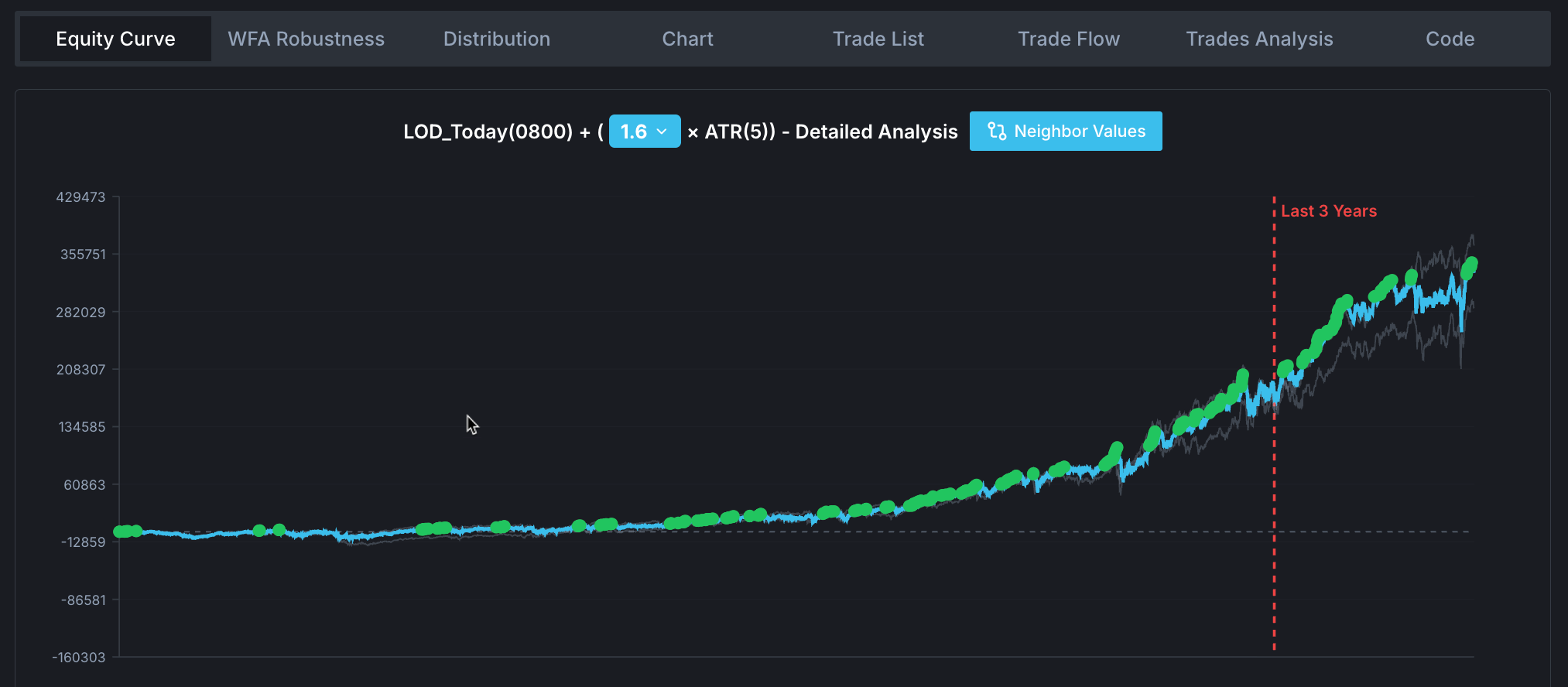
What you used to doManually split your data into in-sample and out-of-sample sets. Run two separate backtests. Compare results in a spreadsheet. Hope you didn't make a mistake. The most basic credibility test in algorithmic trading - and TradingView, MT5, and many other platforms still don't support it natively. Most traders skip it because it's tedious.
What BTP doesOne click. BTP runs the in-sample test, the out-of-sample test, and tests across neighbouring parameter values automatically, then shows you the result side-by-side.
What this means for youThe most important sanity check on any strategy goes from days to seconds. You stop skipping it because it's tedious - which is the real reason most retail strategies look fine in research but fail in live.
2. The Breakout Space Robustness Score
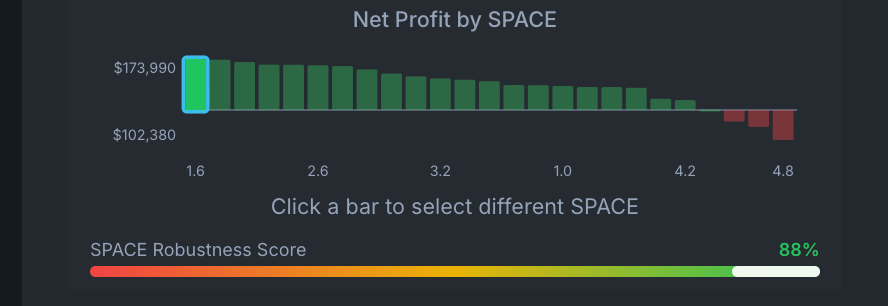
What you used to doLook at a strategy's backtest. Make a gut call on whether it looked "robust enough" to trade. No number to back the call up. No way to compare two strategies on robustness specifically.
What BTP doesThe Breakout Space Robustness Score is a 0-100% rating built specifically for breakout strategies. It scores your foundational breakout model on how robust it is across the parameter neighbourhood, not just at one configuration. Higher number means more evidence the underlying model has structural staying power. This is not a generic backtest score - it is a test you can only meaningfully apply to breakout strategies, and it doesn't exist in any other software.
What this means for youYou get a number you can act on instead of a feeling. Two candidate strategies with similar P&L but different robustness scores tell you which one is more likely to hold up. A high score is evidence of robustness in historical data, not a guarantee of live results.
3. Walk-Forward Robustness Rank Heatmap
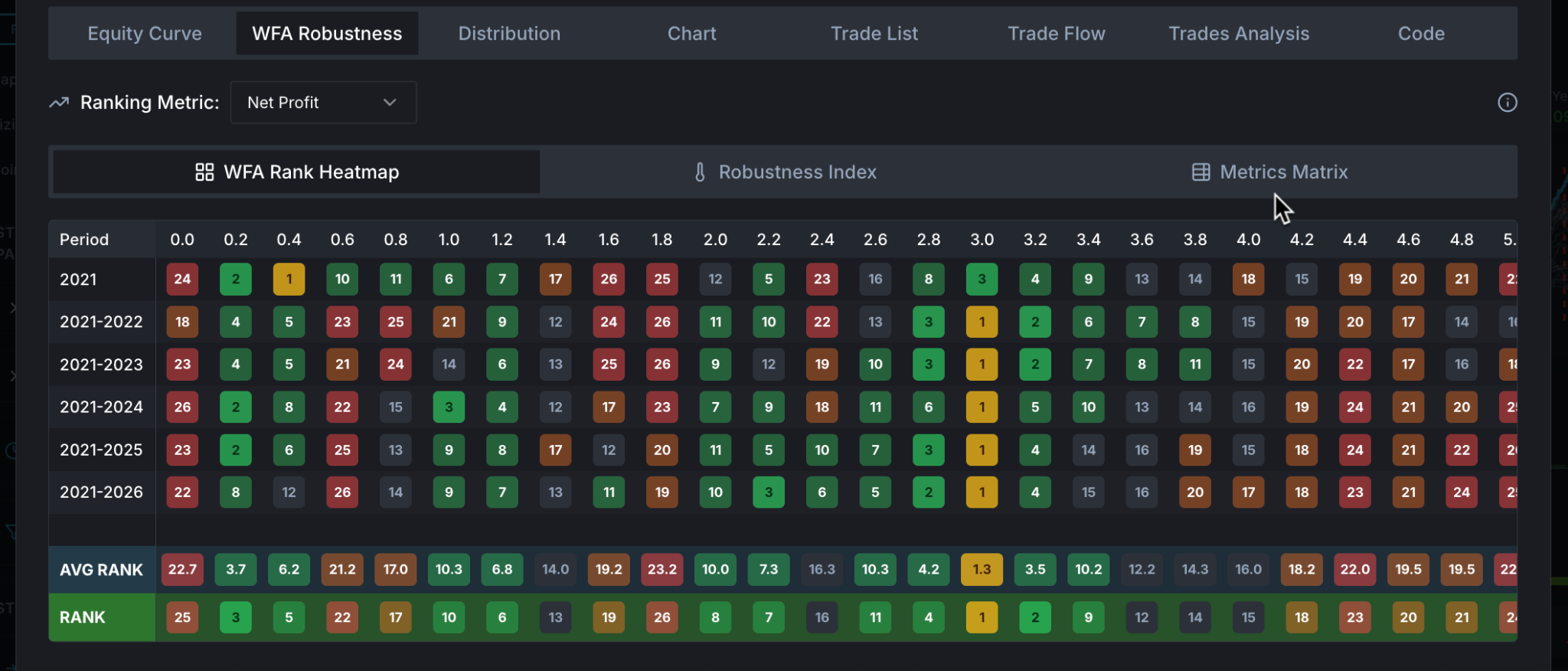
What you used to doRun standard walk-forward analysis on one parameter set. Get a single pass/fail. Wonder whether the parameters next to yours would have held up too, or whether you lucked into one good configuration.
What BTP doesThe Walk-Forward Robustness Rank Heatmap, developed at Mr. Breakouts' own hedge fund, ranks an entire parameter neighbourhood across rolling time windows. The output is a colour-coded grid showing which parameter regions are consistently strong across periods, not just one lucky setup. Full training included with BTP.
What this means for youInstead of "did my one parameter set work?", you answer the harder question: "is the edge here robust to small changes in parameters, or am I sitting on top of a knife edge?". Strategies whose edge survives across the neighbourhood are far less likely to be curve-fits.
4. The Automated Robustness Index (Green / Orange / Red)
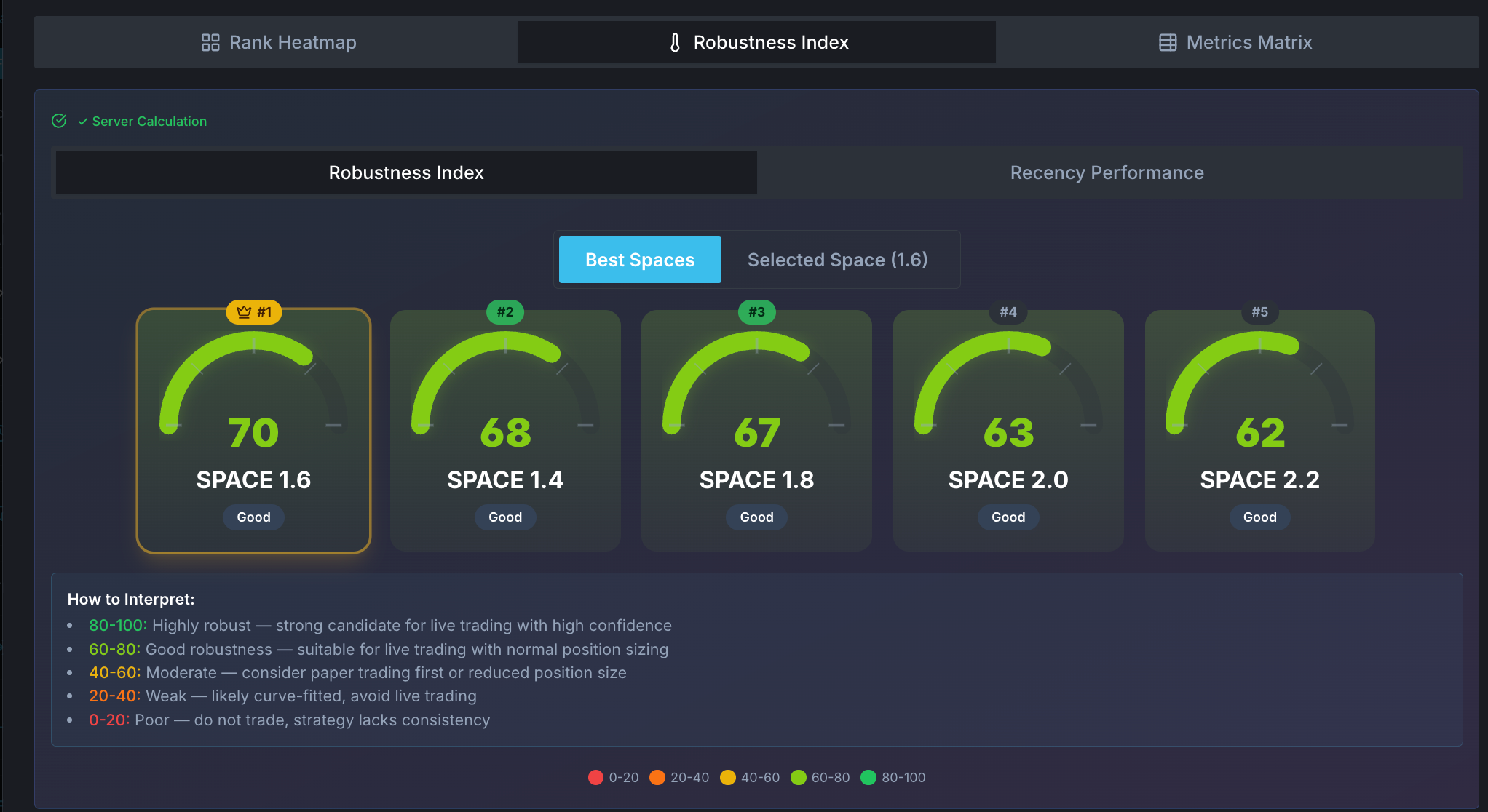
What you used to doStare at half a dozen different robustness metrics and try to combine them into a single go/no-go call. Spend hours on a strategy that any experienced quant would have killed in 30 seconds.
What BTP doesThe Automated Robustness Index combines BTP's hedge-fund-grade robustness assessments into a simple traffic-light verdict. Green: the foundational model is robust by the index's criteria. Orange: it needs more work. Red: stop, this isn't worth pursuing.
What this means for youYou stop sinking entire afternoons into strategies that any experienced quant would have killed in 30 seconds. A glance at the traffic light tells you whether a candidate deserves more of your time or belongs in the bin. Your hours go to the green strategies, not the red ones you would have only abandoned by Sunday night anyway. (Note: the index is a research filter, not a guarantee of live performance.)
5. The Recency Performance Index
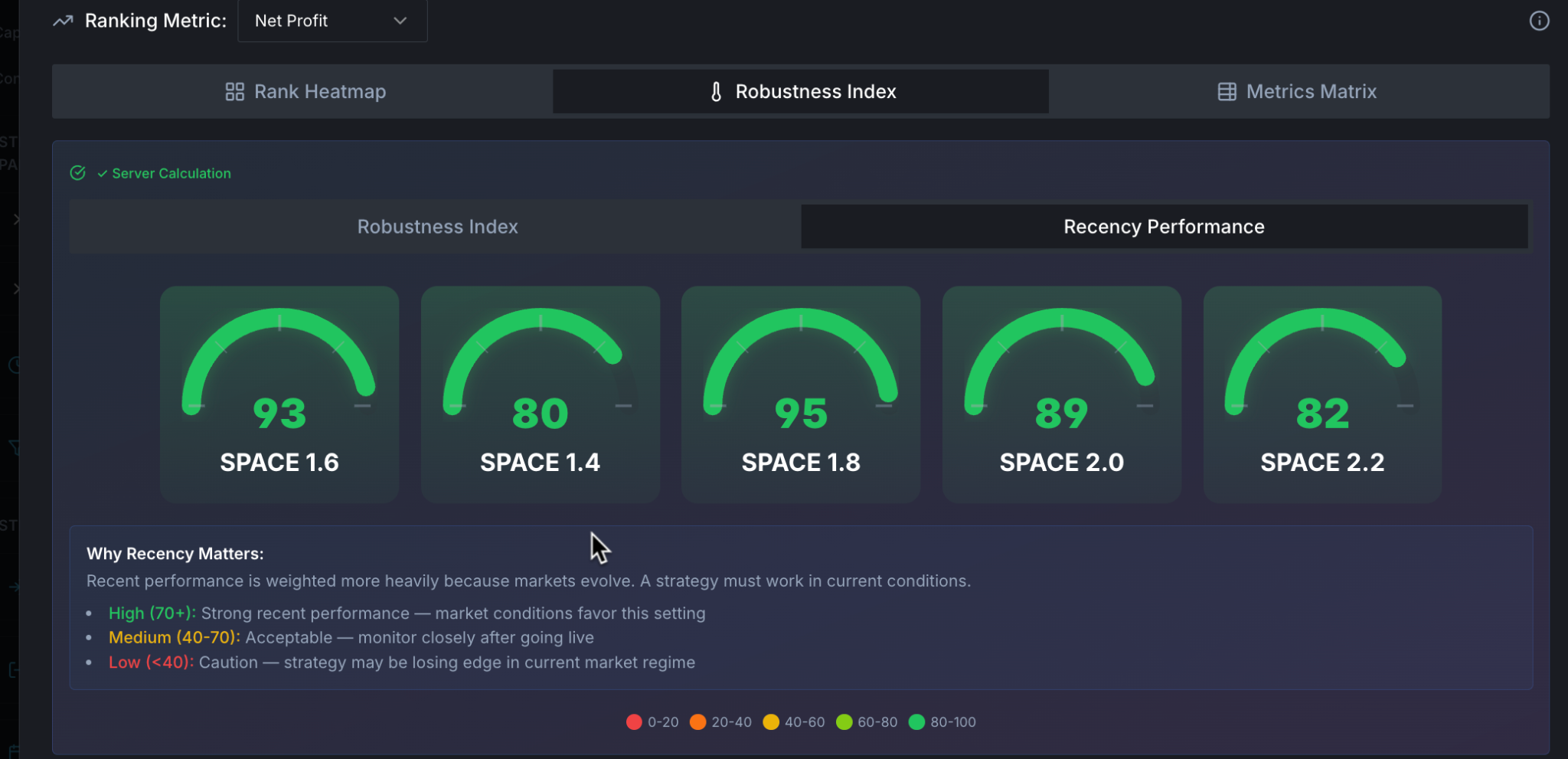
What you used to doBuild a strategy that looked great on 10 years of history, deploy it, and watch it lose money because the last 12 months of market behaviour had shifted and your edge had already faded.
What BTP doesThe Recency Performance Index weighs how well your strategy is performing in the latest market conditions, not just across the full historical window. It tells you whether you are launching the strategy into the right trading environment for the edge it has.
What this means for youYou stop deploying strategies whose edge died six months ago and watching real capital bleed while you wait for the backtest to magically reassert itself. The Recency Performance Index flags strategies that look great on the full historical window but are quietly broken in the conditions you are about to trade them in. (Note: it is not a market timing tool and it cannot predict the future. It is one more signal in the launch decision, alongside the other robustness tests.)
6. 1-Click Cross-Market Validation
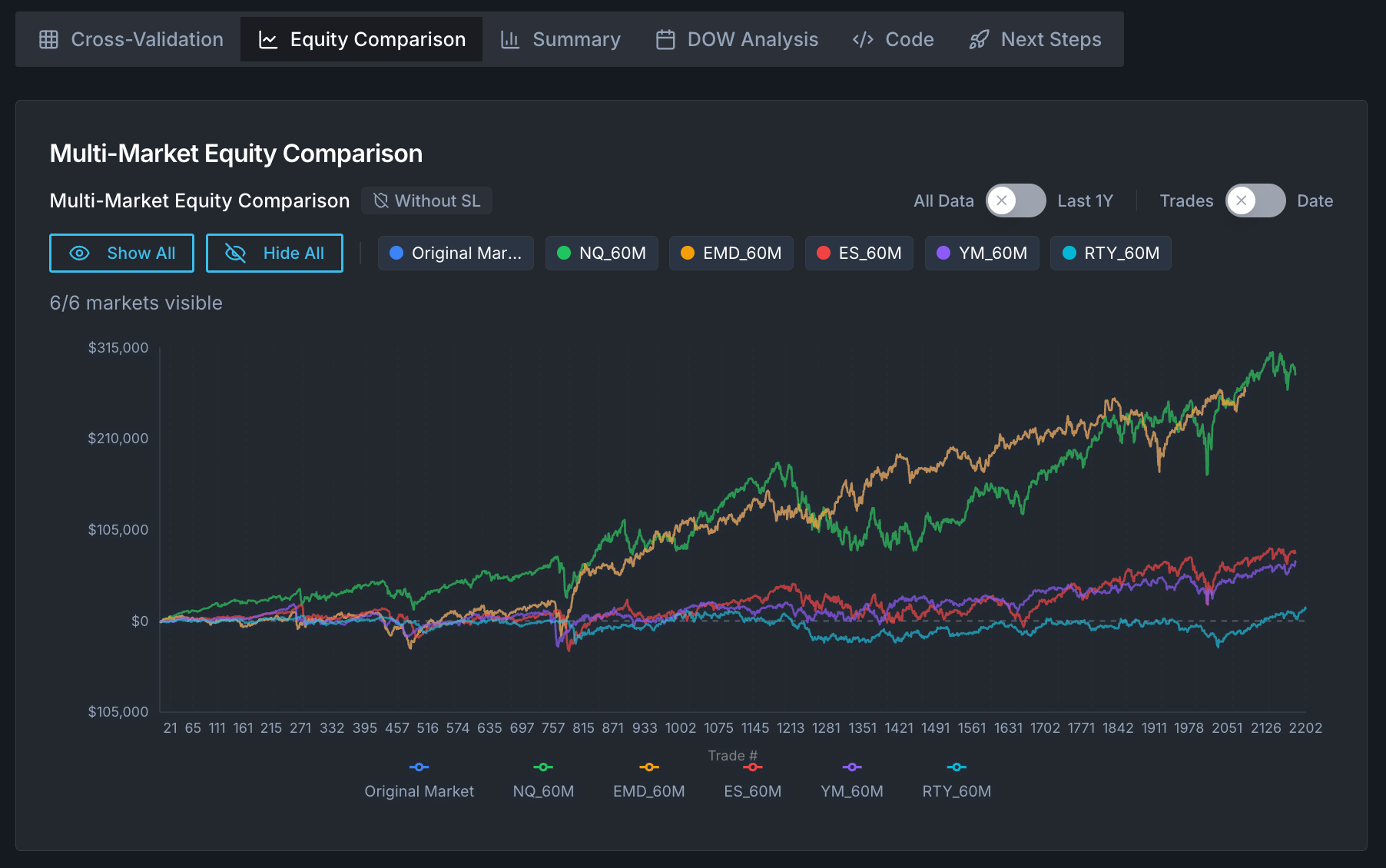
What you used to doBuild a strategy on NASDAQ. Wonder if it works on the S&P, the Russell, or the Dow. Manually re-run the same logic across each market, one by one, trying to keep parameters consistent. Most traders don't bother, which is how single-market overfits get deployed.
What BTP doesOne click. BTP applies your strategy across related markets and shows you whether the edge holds, weakens, or disappears entirely. If a strategy only works on the market it was built on, it is likely an overfit. If it works across related markets, that is structural evidence.
What this means for youYou stop trusting strategies that only work in one market. Cross-market consistency is one of the strongest signals that a breakout edge is real rather than fitted. (Different markets have different volatility profiles, so exact parameters may need calibration market-by-market - the concept is portable, the numbers are not.)
Related reading: Cross-Market Validation: The Final Test Before Going Live.
7. Transparent Models Instead of AI Black Boxes
What you used to doRead about AI "magically" generating ready-to-trade strategies from a single prompt. Watch demos that promise a complete trading system in 30 seconds with no input from you. Wonder whether to trust a model when you can't explain why it takes the trades it does. (And then wonder how you'd defend the decision to anyone else - a partner, a prop firm, your future self - if the strategy started losing.)
What BTP doesBTP builds breakout strategies on transparent, explainable logic using the Mr. Breakouts Formula - a proven, step-by-step framework for systematic breakout development. Within that framework, familiar tools like moving averages, pivot points, price action structures, and breakout filters slot in as the building blocks of each step. You can read the strategy. You can explain why it enters and exits. You can pinpoint exactly which rule is failing when something goes wrong. No black box, no hallucinated logic, no "the AI just said so".
What this means for youYou trade a strategy you understand. That matters when something goes wrong - because it always does eventually, and you need to know what to adjust. AI tools can be useful for idea generation in the research phase, but the deployed strategy itself stays explainable.
Related reading: AI in Algorithmic Trading: 7 Real Case Studies and What the Data Shows.
Time-saver tools (8-11)
Spending minutes on what used to take weeks. Most breakout traders spend the bulk of their development time on tedious manual work that produces zero edge. These four tools eliminate that work.
8. Build, Test, and Analyse Thousands of Breakout Models in Minutes
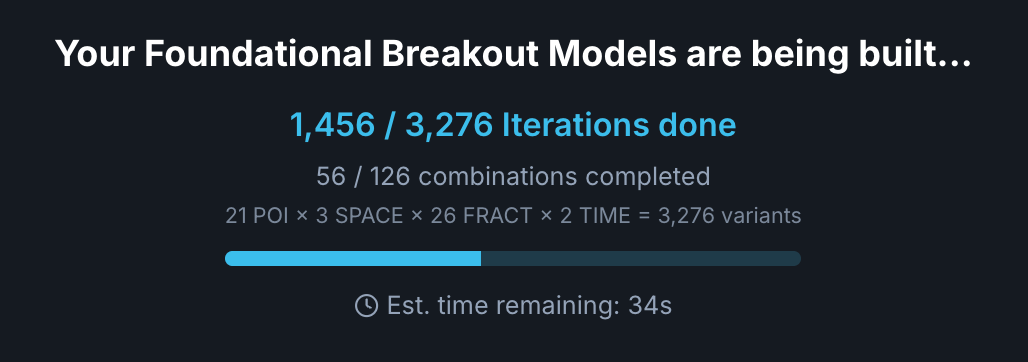
What you used to doHand-code each candidate strategy. Run a backtest. Tweak parameters. Re-run. Repeat for hours, sometimes weeks, hoping to land on one viable idea. Most ideas die in the first hour of testing - but you spent the hour anyway.
What BTP doesA fully automated 1-click workflow, built on the Mr. Breakouts Formula, builds and tests thousands of breakout model variations in seconds-to-minutes. The output is a ranked list of candidates you can actually evaluate - not random combinations of indicators, but variations within a framework that already works.
What this means for youYou generate more viable strategy candidates in an afternoon than most traders build in months. Your time goes into evaluating and refining the best candidates, not into the manual mechanics of producing them.
9. 1-Click Built-In Strategy Templates
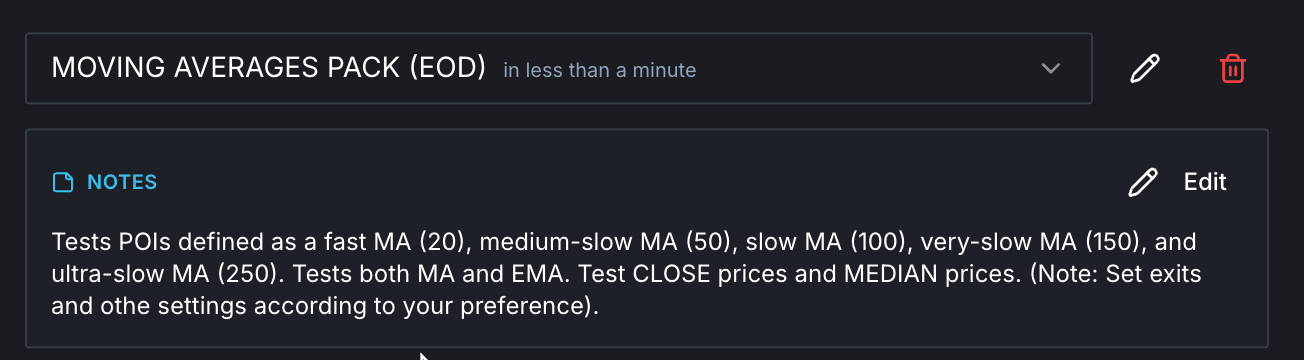
What you used to doOpen a new strategy builder. Stare at thousands of indicator settings. Spend weeks learning a new platform before you've built a single tradeable idea. Most traders never get past the learning curve.
What BTP doesPick a built-in template - Moving Averages, Pivot Points, Price Action, or a combination - and start building. The template handles the setup. You focus on the parameters and filters that actually affect performance.
What this means for youYou finish your first breakout strategy in BTP before most platforms have finished loading. The templates are the difference between "I've been meaning to try systematic trading for two years" and "I built a strategy last weekend".
10. Don't Code. Copy-Paste.
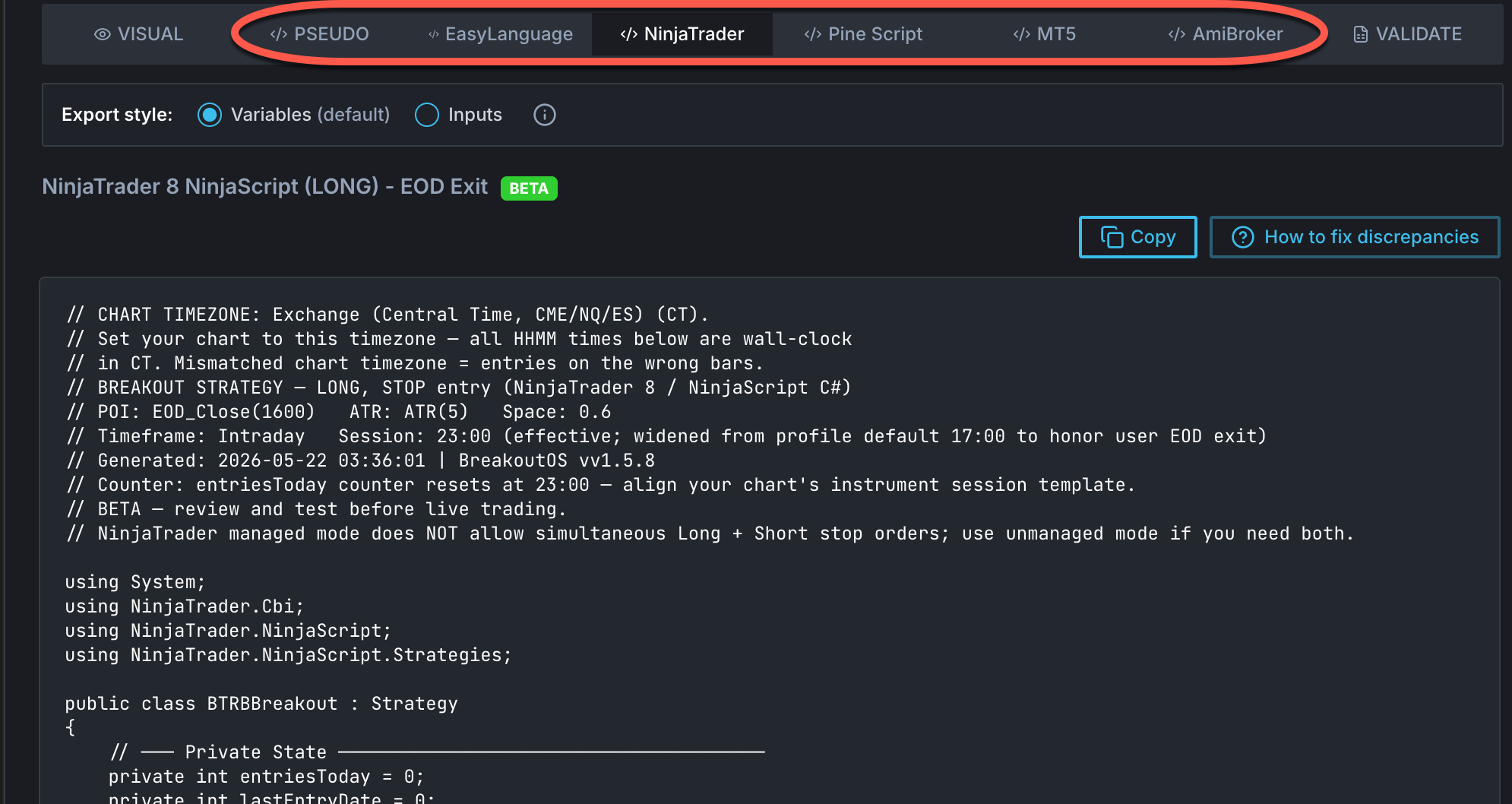
What you used to doBuild a strategy in one platform. Manually re-code it for your live trading platform. Debug the translation. Discover bugs months later when live results don't match the backtest.
What BTP doesEvery strategy you build in BTP exports as ready-to-paste code for TradeStation, MultiCharts, NinjaTrader, MetaTrader 5, TradingView, and AmiBroker. You copy, you paste, you're live.
What this means for youThe translation step that ruins more strategies than any other research mistake is removed entirely. What you tested is what you trade.
11. Visual, Intuitive Output Organisation
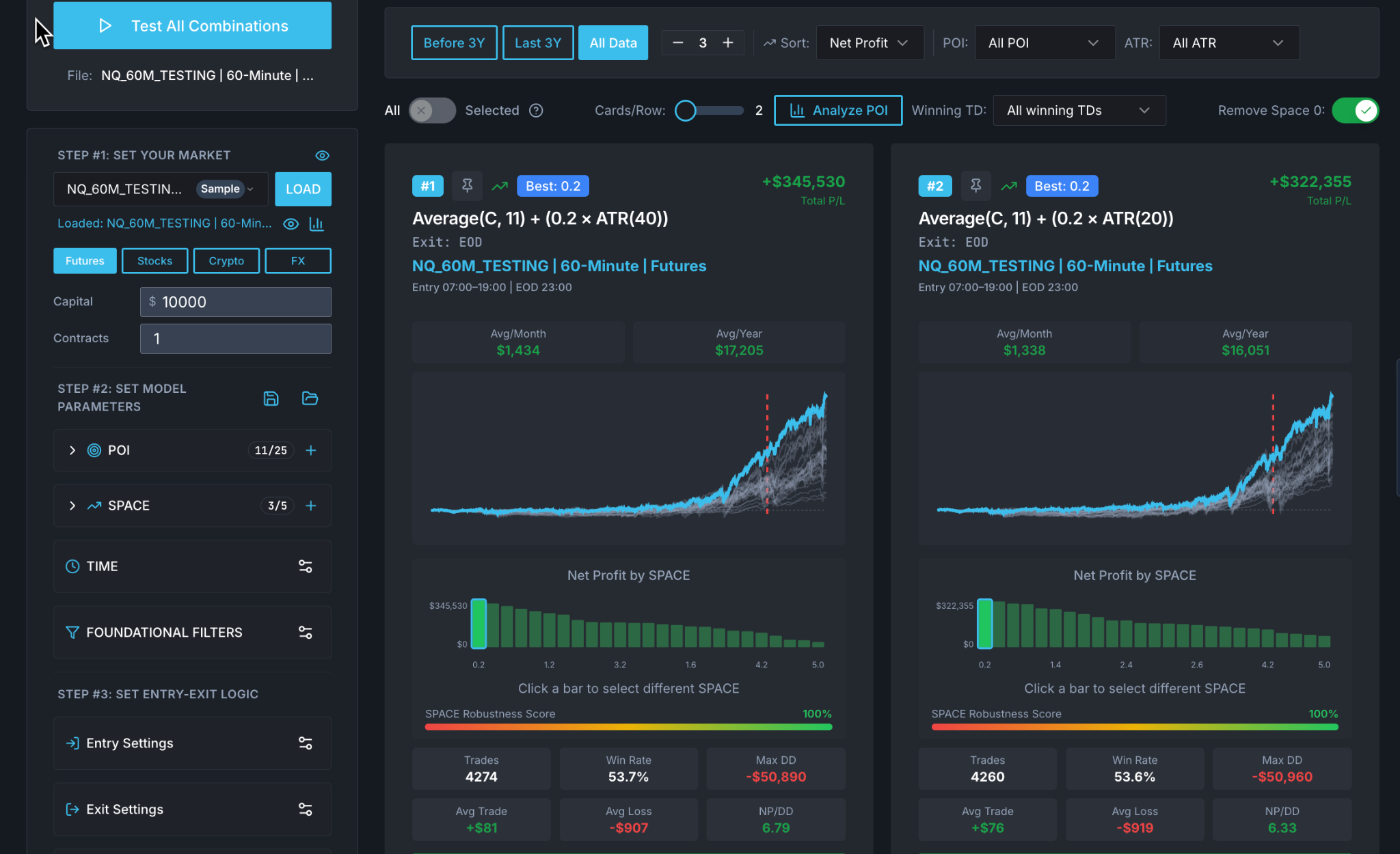
What you used to doSift through a wall of backtest results in CSV exports. Sort, filter, eyeball equity curves one at a time. Lose the candidates that looked promising because there was no good way to pin them.
What BTP doesBTP was built by traders, not engineers, so the output is organised the way traders actually evaluate strategies. You can sort, rank, pin, pick, analyse, and save candidates visually. Side-by-side equity curve comparisons, parameter views, and ranking metrics are all in one place.
What this means for youYou stop scrolling through CSV exports at 11pm hunting for the candidate that looked promising three hours ago. Sort, rank, pin, compare side-by-side, all in one place. The strategies you want to keep stay visible instead of buried in tabs you have to keep flipping between. The hours you used to lose to bad workflow go back into actual evaluation.
Convenience tools (12-15)
Removing the friction that stops you finishing strategies. The features here aren't about edge or speed directly - they're about removing the everyday annoyances that quietly kill momentum.
12. The 5-Step Framework

What you used to doOpen a platform with thousands of features and no opinion on what order to use them. Spend months learning the toolkit without ever finishing a tradeable strategy.
What BTP doesBTP gives you a proven 5-step framework: Prepare → Prototype → Pick → Finalize → Validate. Each step has a clear job, and the next step doesn't unlock until the previous one is done. The whole workflow is built around producing a strategy, not exploring features.
What this means for youYou finish strategies. You stop drowning in a maze of menus, settings, and features you'll never use - the kind of bloated toolkit that swallows entire weekends and leaves you no closer to a tradeable strategy. The framework removes the "what do I do next?" question that kills momentum for most retail systematic traders.
Related reading: Building a Complete Breakout Strategy in BreakoutOS (Step-by-Step).
13. Real-Time Slider-Based Risk & Management Testing
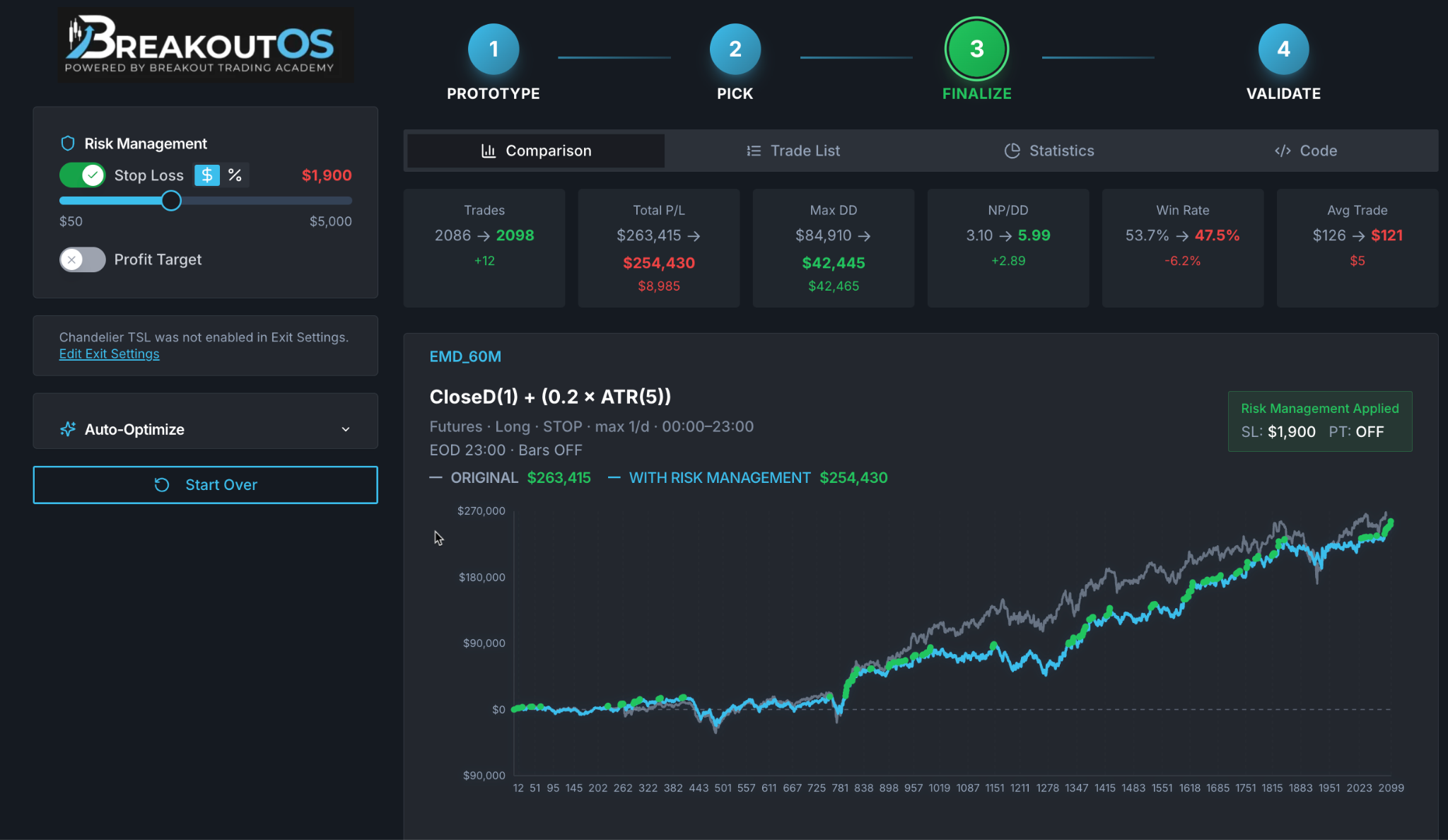
What you used to doRe-code stop-loss values. Re-run the backtest. Re-code profit targets. Re-run. Repeat for trailing stops, time stops, position sizing. Each tweak meant another round trip through the editor and a fresh backtest.
What BTP doesMove a slider. The result updates in real time. Stop loss, profit target, trailing stop, time-based exit - any management parameter, adjusted live, with the equity curve and metrics responding immediately.
What this means for youYou finalise your trade management in an afternoon instead of a week. You actually explore the parameter landscape instead of accepting the first value that worked. Strategies get tighter because tightening them is no longer painful.
14. Cloud: Start on Your PC, Finish on Your iPad
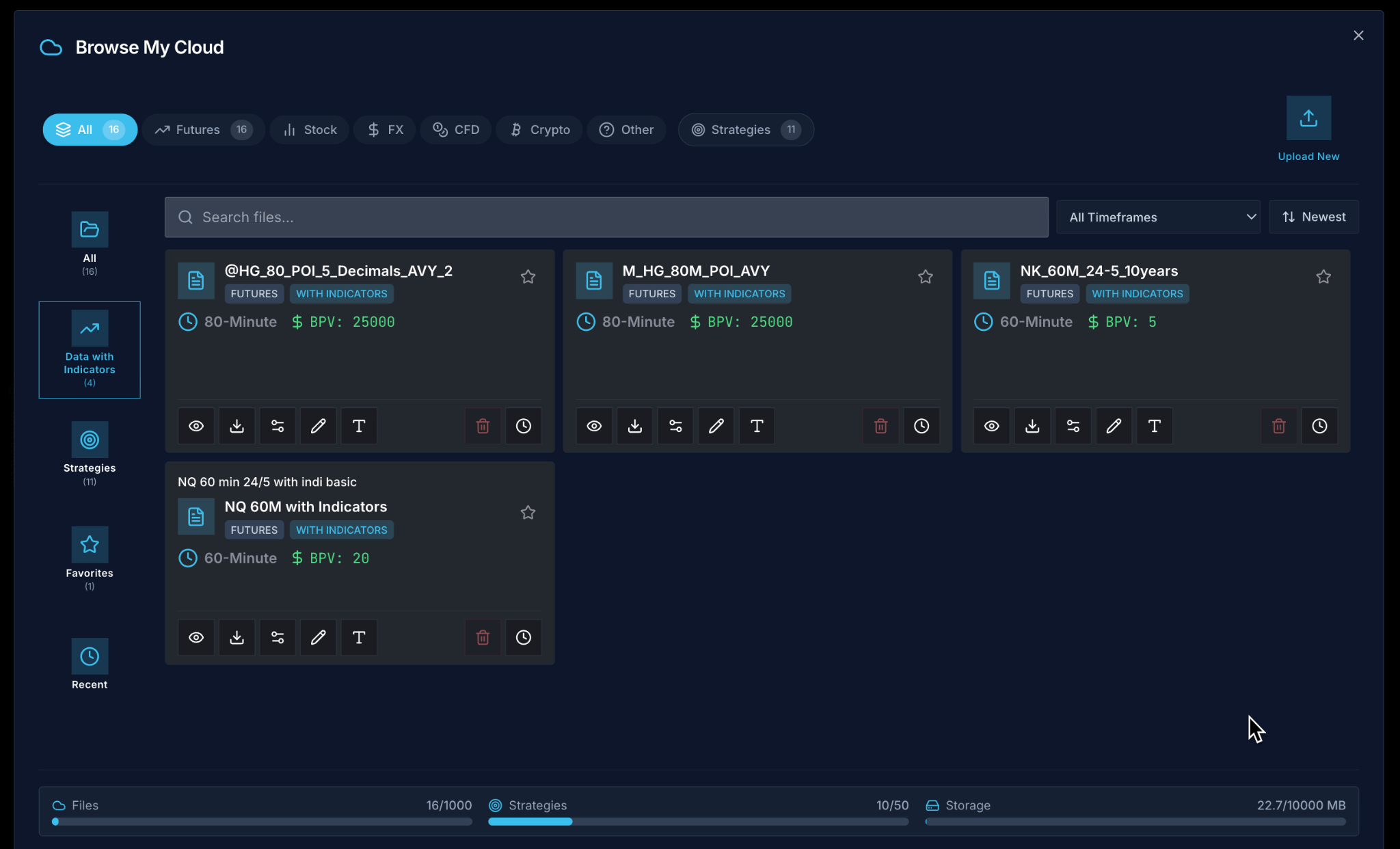
What you used to doRun desktop software tied to one machine. Wait until you got home to check on a strategy. Email backtest files to yourself. Lose work when the laptop crashed.
What BTP doesEverything lives in the cloud. Strategies, parameters, results, code exports - all of it, available from any device. Start building on your PC, review on your iPad, finalise on a different machine entirely.
What this means for youYour research doesn't die with a laptop crash, get stranded on the machine you forgot to bring on the trip, or live in a zip file you emailed to yourself at 2am. Start on your PC, refine on your iPad, finalise on a different machine entirely. Nothing to install, nothing to back up, nothing to lose.
15. Build Global Breakout Portfolios on Any Asset, Any Market
What you used to doJump from indicator to indicator, market to market, never going deep on any one approach. The classic retail trader pattern: lots of motion, no compounding mastery.
What BTP doesBTP is specifically a breakout-strategy builder. You go deep on one approach - foundational breakout models - and apply that approach across asset classes: futures, stocks (US and international), forex, crypto. One framework, many markets.
What this means for youMastery instead of scatter. The same breakout framework you understand on NASDAQ can be applied to AAPL, EUR/USD, or Bitcoin. Your edge compounds across markets instead of getting diluted across approaches.
See Breakout Trading Pro in Action
Watch the BTP demo videos and see the 5-step framework, robustness tools, and how BTP fits inside BreakoutOS.
Watch the BTP Demo →Built for any market: 5 asset-class examples
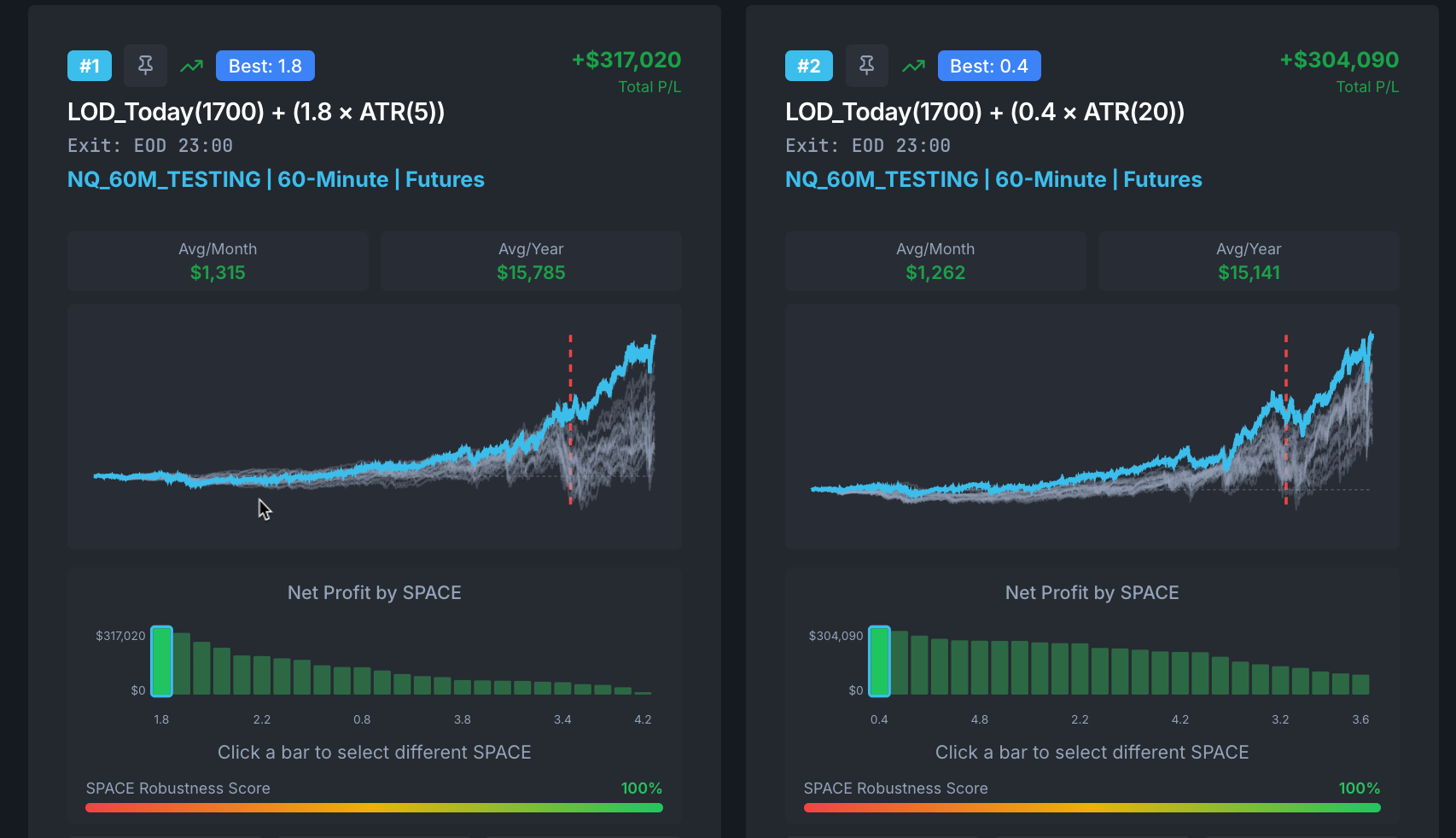
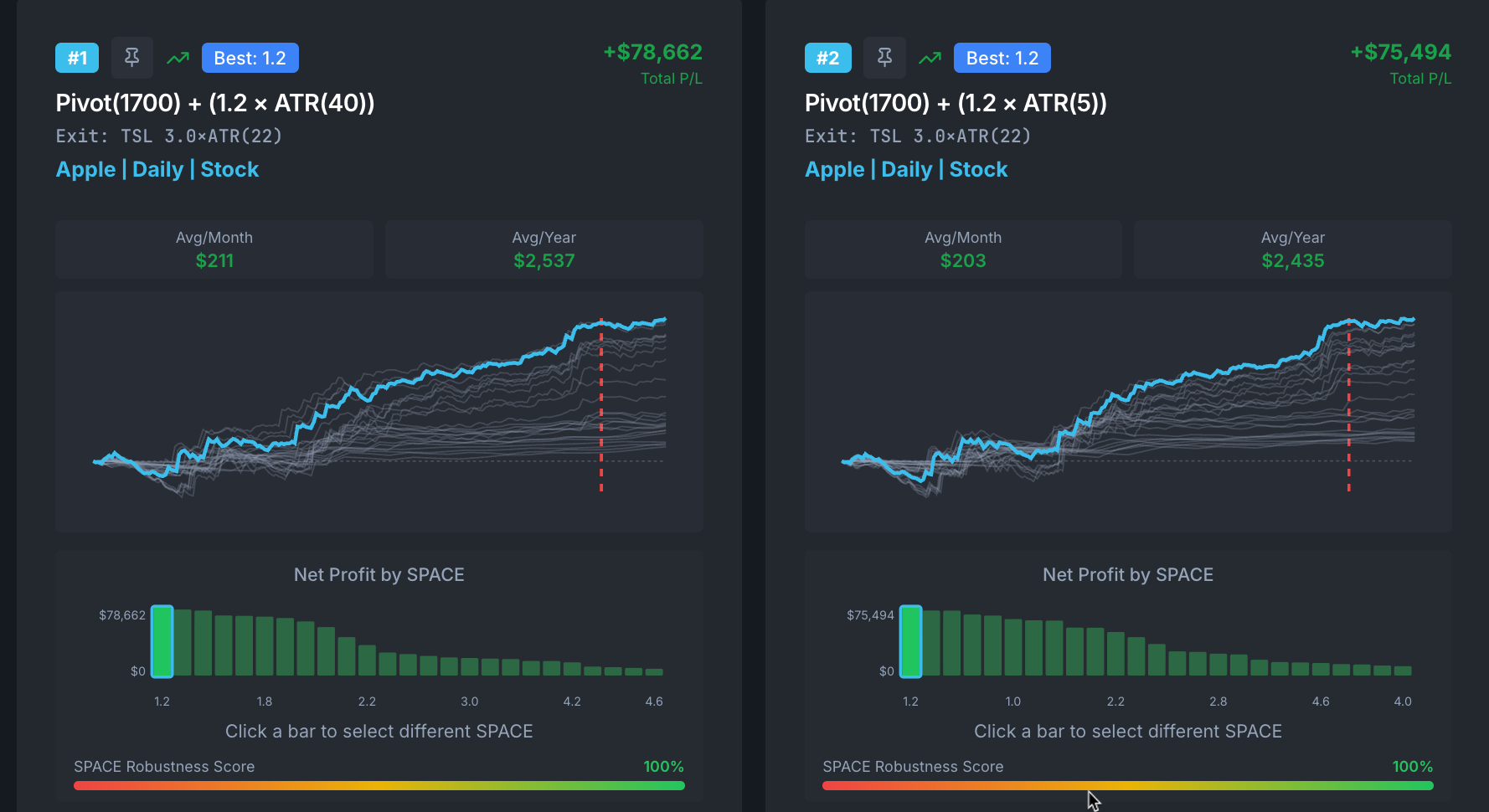
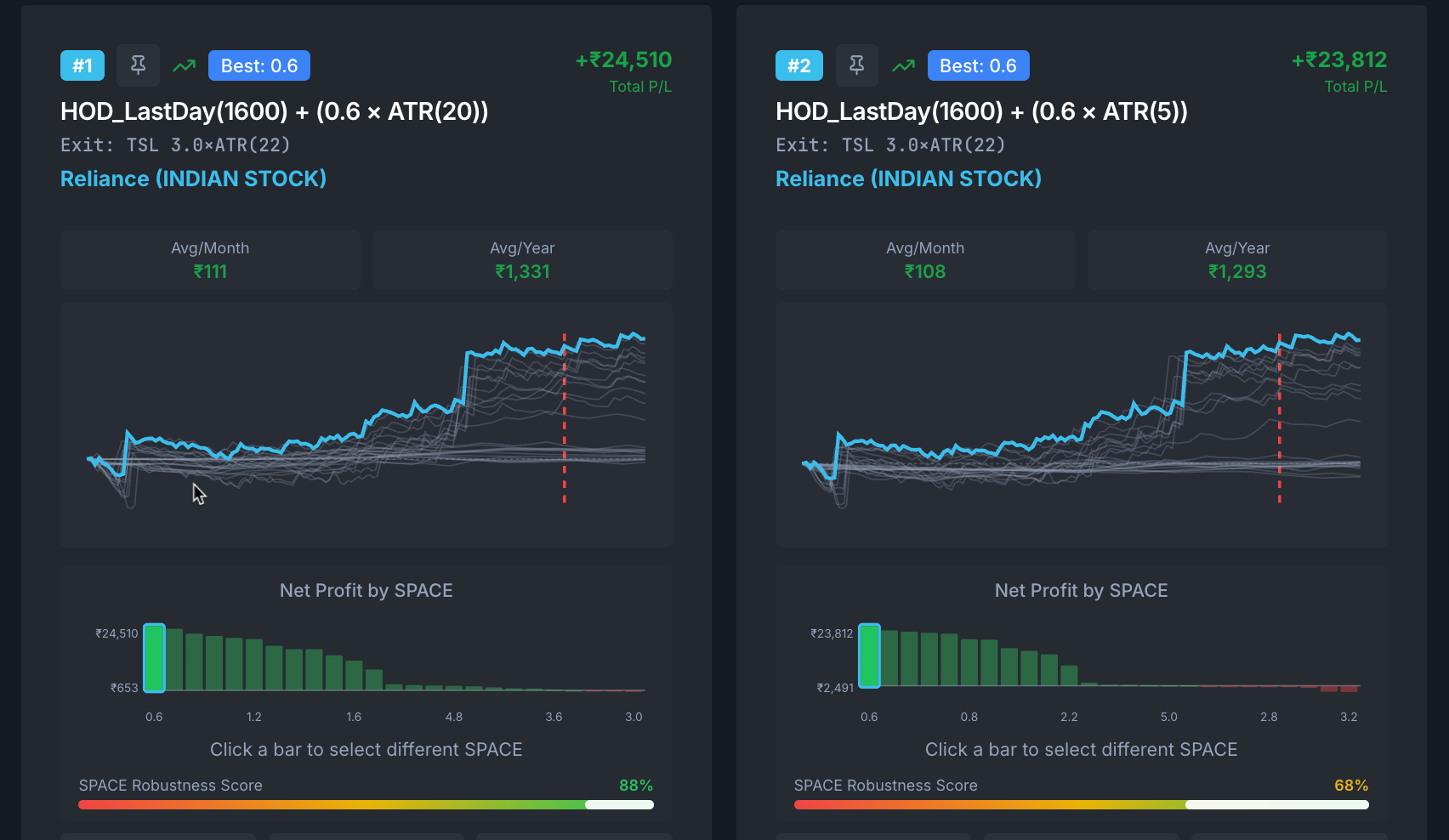
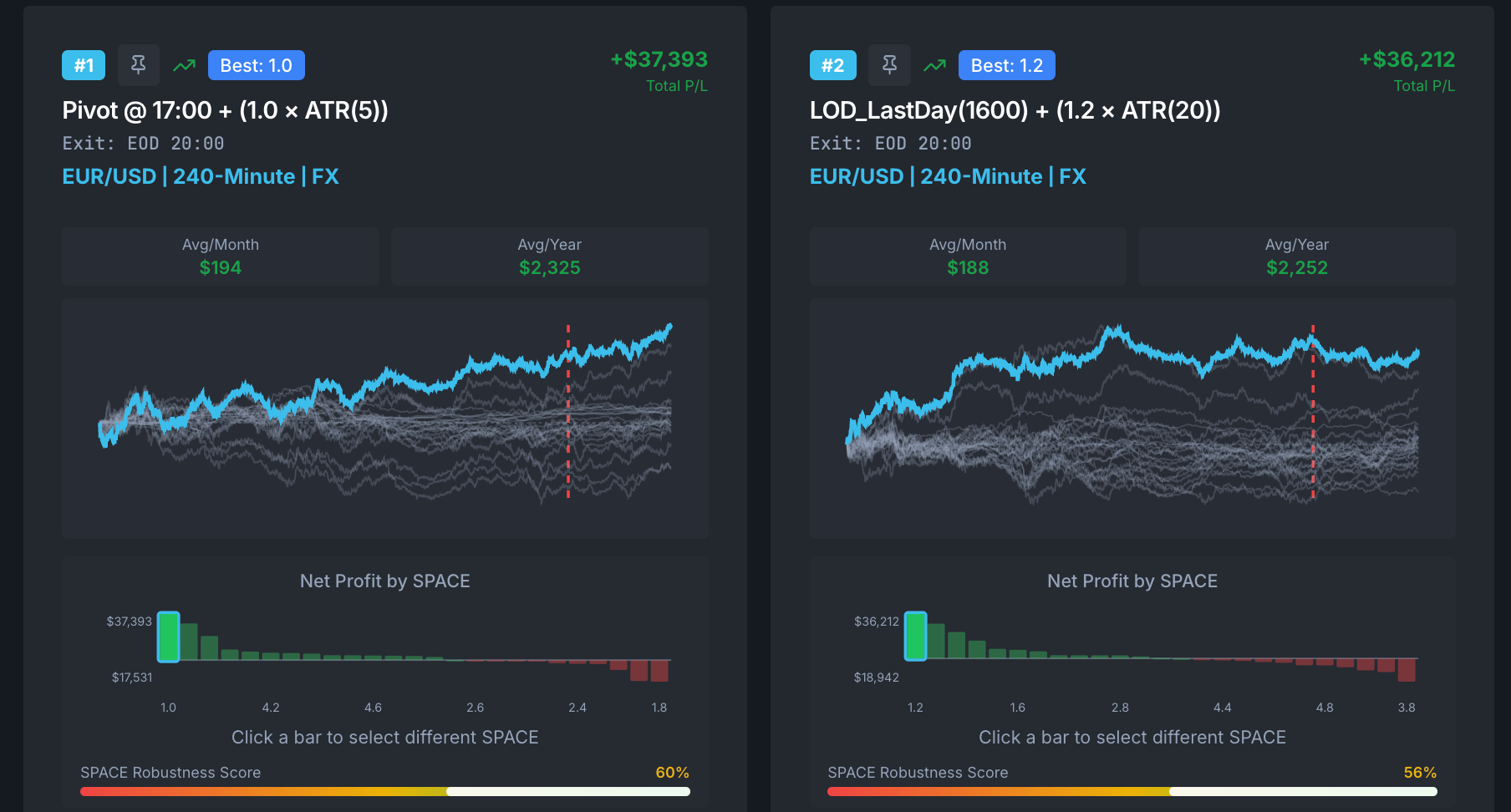
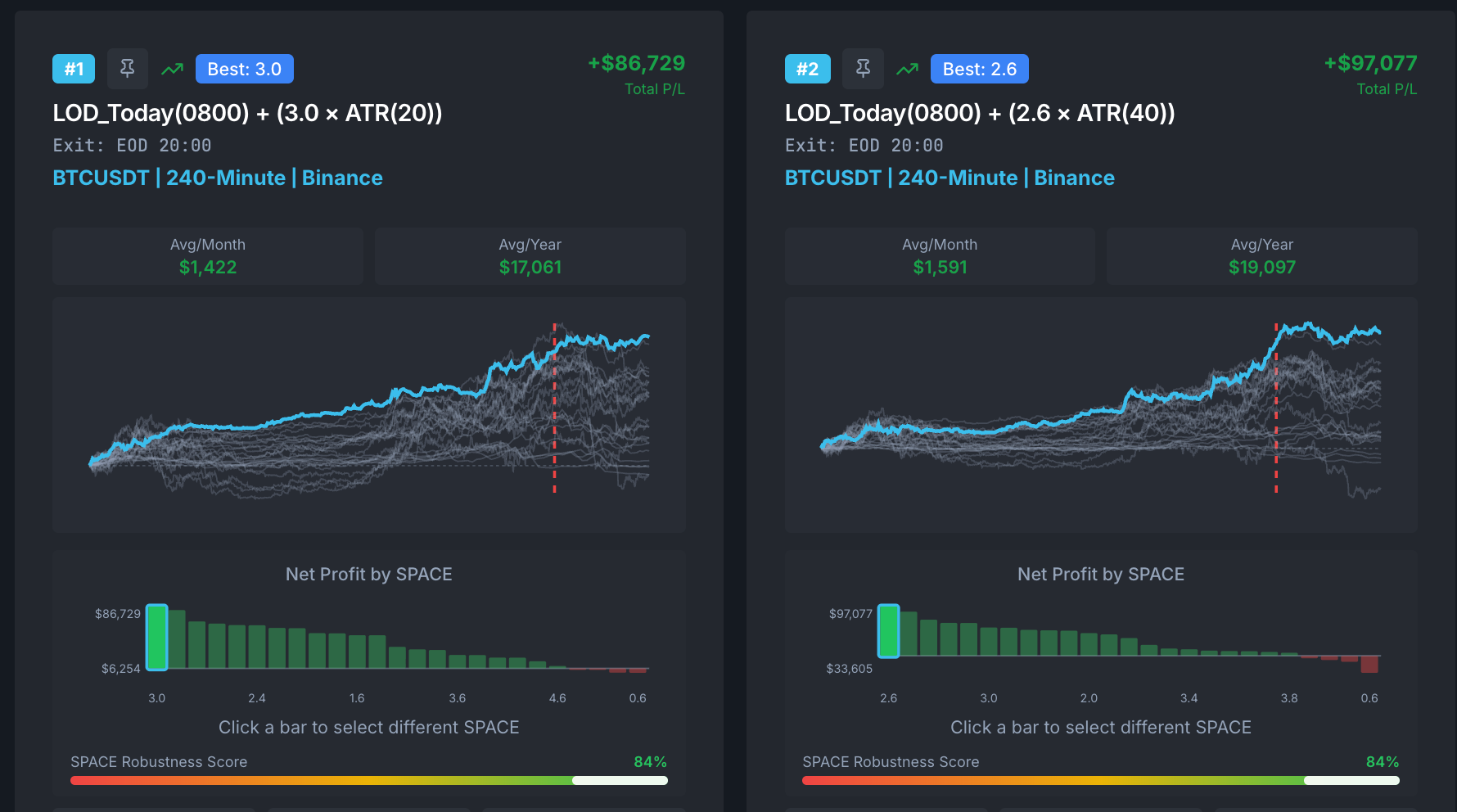
A common worry when traders evaluate BTP: "does this work for my market?". The foundational breakout model BTP builds has been demonstrated across all major asset classes. Below are five examples of the same foundational approach applied to different markets. These are research examples, not live trading results or performance promises.
Futures: E-mini NASDAQ
US Stocks: AAPL
International Stocks: Reliance (India)
Forex: EUR/USD
Crypto: Bitcoin
How BTP fits inside BreakoutOS
BTP is one of 20 proprietary tools inside BreakoutOS. It is the strategy-building app - the place you go to create a foundational breakout model from scratch, using the Mr. Breakouts Formula as the foundation.
Once you have a strategy built in BTP, the other apps in BreakoutOS handle the next stages of the lifecycle:
- Smashing False Breakouts PRO for filtering out the most common breakout failures
- Cross Validator for the deeper multi-market analysis (beyond BTP's built-in cross-market check)
- Backtest Auditor for the 9-check overfitting audit before deployment - see The BreakoutOS Backtest Auditor
- Strategy management apps for monitoring strategies after they go live and deciding when to stop trading a fading one - see When to Stop Trading a Strategy
In short: BTP is where strategies are born. BreakoutOS is the wider system that keeps them alive.
Get Breakout Trading Pro
See the full BTP sales page and learn how to get access.
Visit the BTP Page →Frequently Asked Questions

About the Author
Tomas Nesnidal, known to the systematic trading community as Mr. Breakouts, is a breakout trading specialist, hedge fund co-founder, and creator of BreakoutOS. He has managed institutional portfolios using breakout strategies for over 15 years, trading from 65+ countries. He is the author of The Breakout Trading Revolution and co-founder of Breakout Trading Academy.